
Research
Areas of Interest
The Franklin lab studies how immune cells regulate tissue repair and remodeling during injury, infection, fibrosis, and cancer. Our goal is to identify the molecular mechanisms by which immune cells coordinate repair and decipher how dysregulation of these pathways contributes to disease pathology.
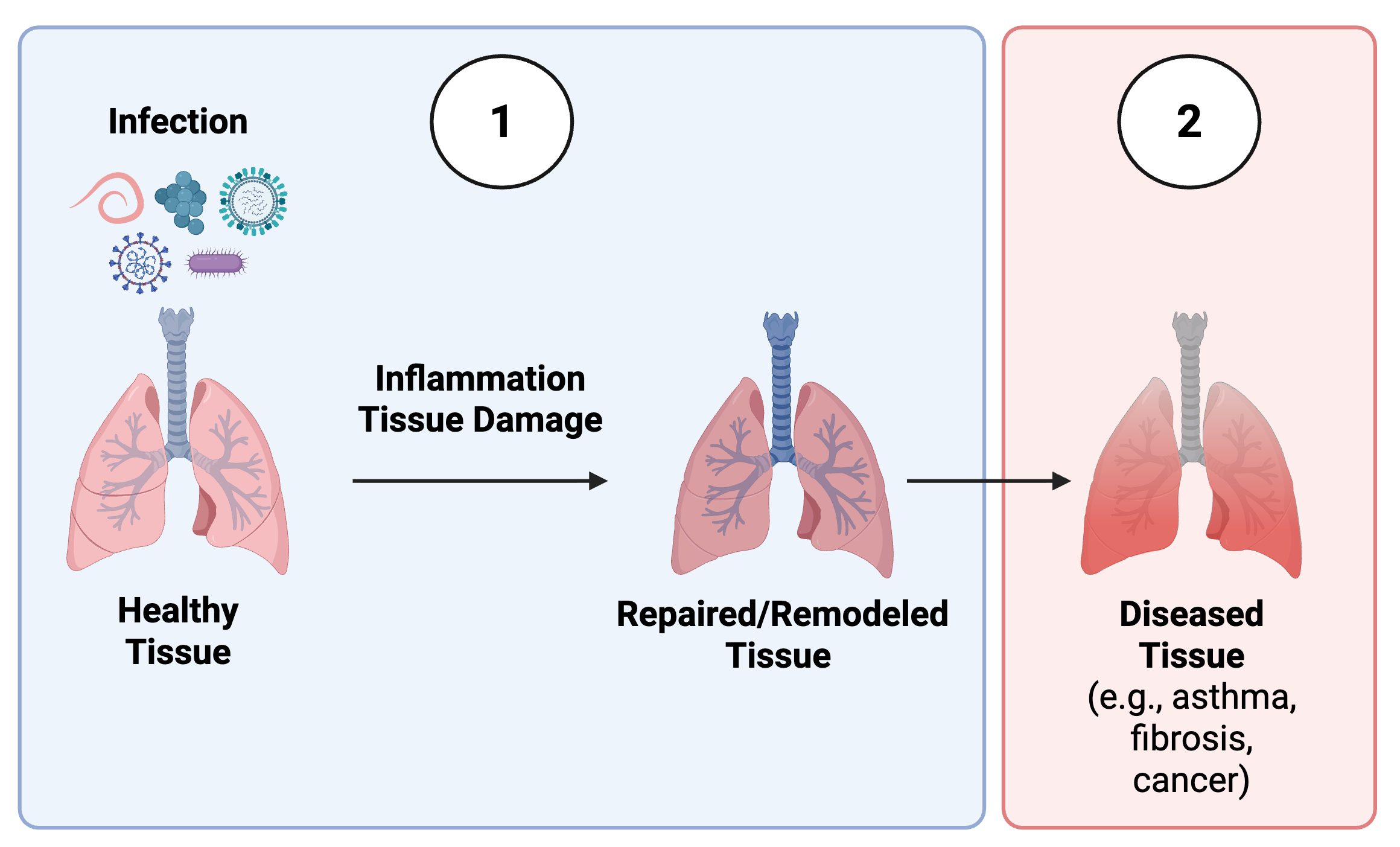
Barrier tissues are continuously exposed to environmental challenges, making tissue damage an inevitable feature of life. The capacity to repair is therefore one of the most fundamental biological processes for preserving organ function across the lifespan. Nowhere is this more evident than during infection, when immune defense and tissue repair are inseparably connected. When these repair processes are poorly induced or improperly resolved, the consequences include degenerative, fibrotic, and even malignant disease. Our research program seeks to identify the specific immune regulators that govern tissue repair, with the goal of developing targeted strategies that enhance regeneration without compromising host defense.
Revising the prevailing view that repair often follows pathogen clearance, we propose that immune cells actively initiate and coordinate early repair programs while inflammatory responses act to eliminate infection. Such coordination enables timely repair that is essential for preserving barrier integrity and tissue function, but it comes at a cost. The “need for speed” can lead to scarring, fibrosis, and functional decline. Our lab utilizes viral respiratory infection as a system to interrogate tissue repair with a focus on how these reparative programs create vulnerabilities that predispose tissues to disease.
Current Work
1) Deciphering immune-epithelial crosstalk in lung homeostasis and repair
Macrophage-derived OSM as a mediator of epithelial cell homeostasis and repair
Interferons as regulators of lung regeneration
Molecular determinants of epithelial cell fate and function after lung injury
Neuro-immune adaptations to tissue damage and repair
2) Uncovering mechanisms of tissue remodeling that promote disease
Tissue repair responses as drivers of fibrosis and cancer
Viral-induced remodeling in the development and exacerbation of asthma
Schematic designed using BioRender